Earth launch
A commercial launcher places the compact transfer vehicle into Earth orbit.
Lunar logistics infrastructure
An autonomous platform on the lunar surface collects samples and sends them with an electromagnetic impulse — without launching a new spacecraft for every delivery.
Limited first mission
Apply for a place in the early scientific and collectible lunar sample delivery programme. Final availability depends on mission success, permits and scientific verification.
The remaining balance is requested only after the platform becomes operational and your sample allocation is confirmed.
One platform. Repeated missions.
LELP separates permanent lunar infrastructure from the payload that returns. The platform lands once, then repeats the collect–package–launch cycle.
A commercial launcher places the compact transfer vehicle into Earth orbit.
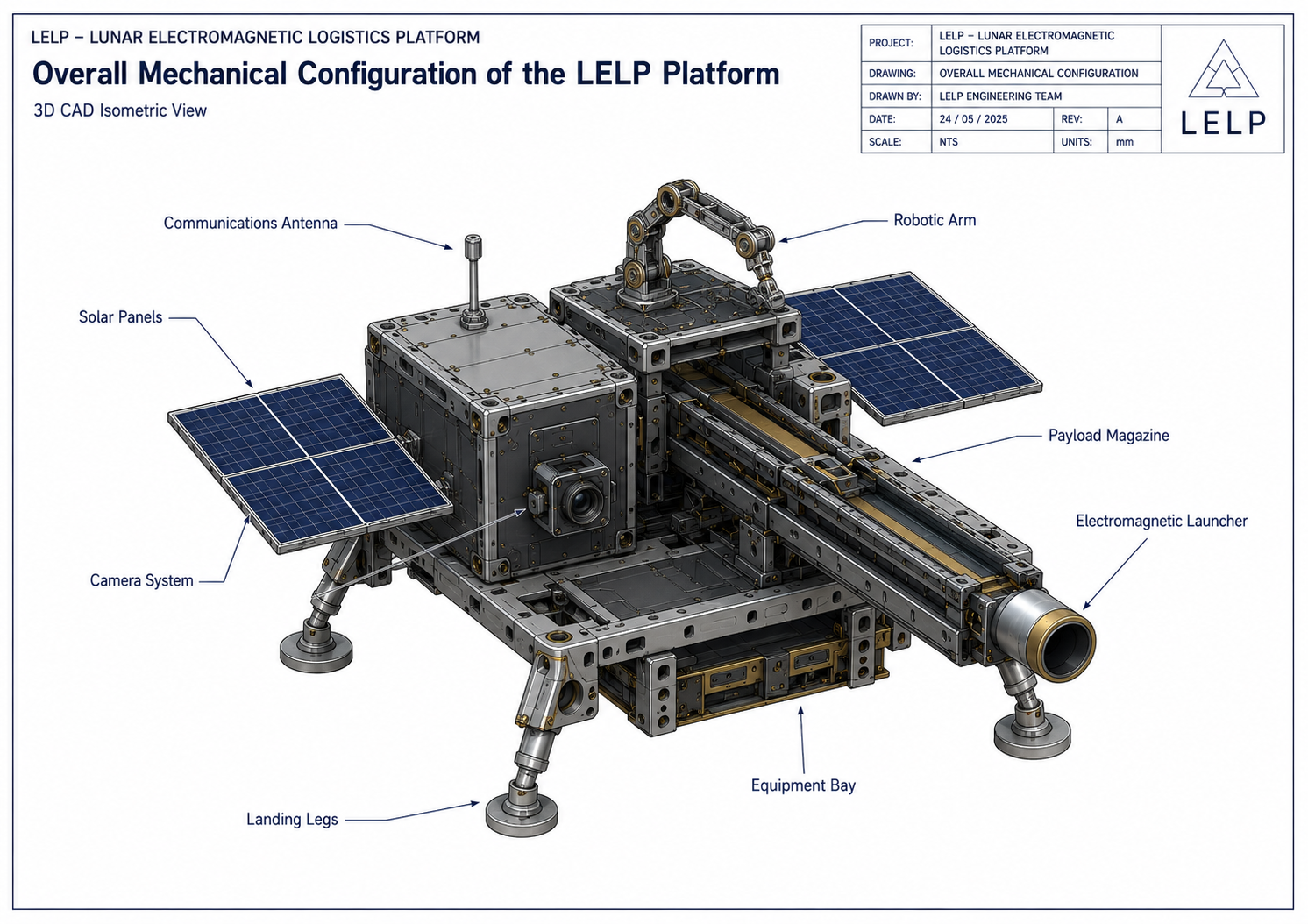
The lander deploys LELP, solar arrays, communications and the sampling system.
Cameras map local terrain while the robotic tool selects rock and regolith.
Material is identified, weighed, sealed in a capsule and logged for traceability.
Supercapacitors discharge through the launcher while the platform stays on the Moon.
A lightweight stage corrects the trajectory toward orbit or a future return architecture.
Built to stay
A modular aluminium–titanium structure integrates autonomous navigation, energy storage, payload handling and electromagnetic launch.
Inside LELP
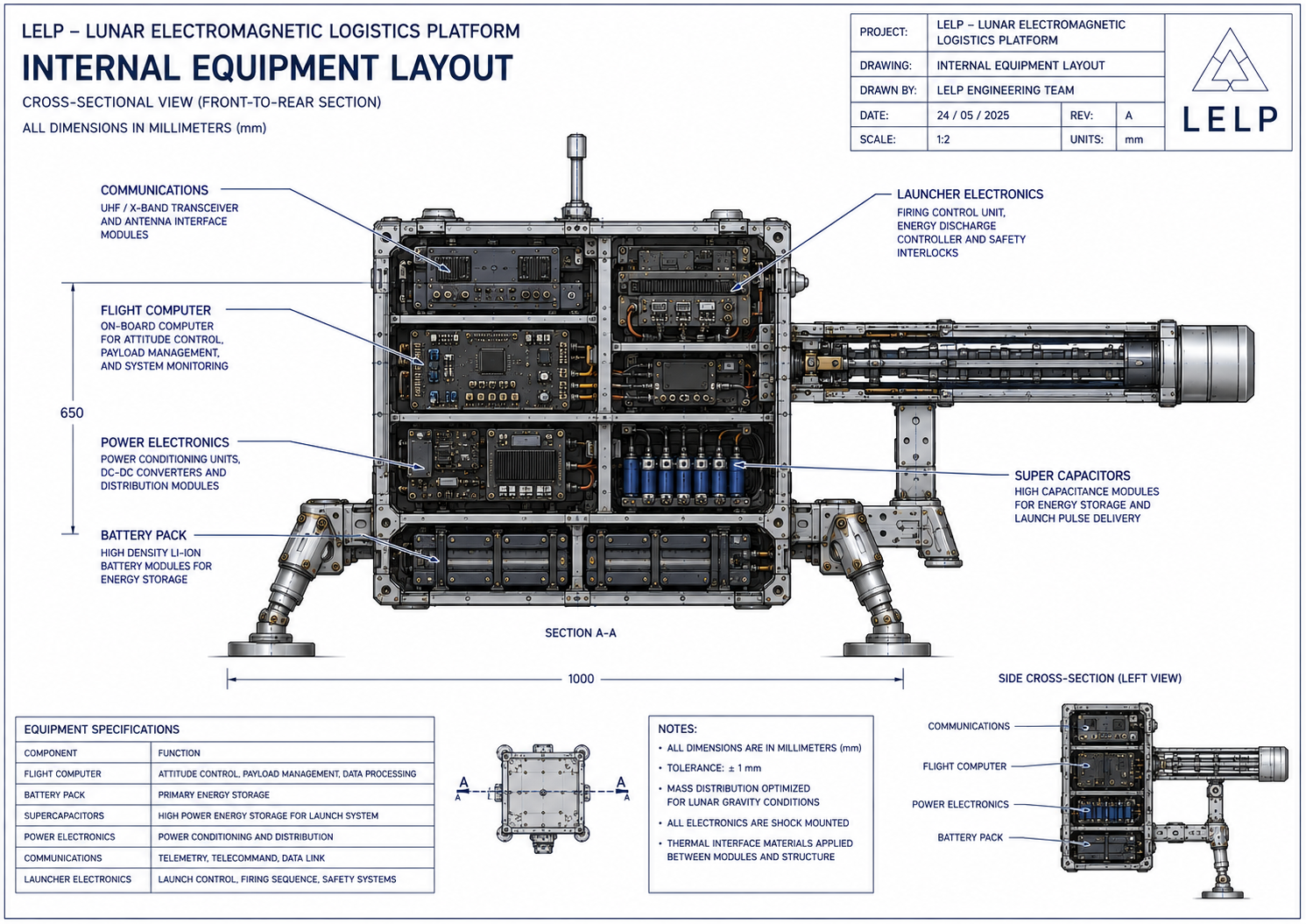
Flight computer, cameras, IMU and communications for remote operations.
Solar arrays, Li-ion batteries and pulse-delivery supercapacitors.
Manipulator, sampling tool, container and replaceable capsule magazine.
No combustion at liftoff
The linear electromagnetic launcher gives the capsule its initial velocity. A miniature electric propulsion system may correct the course, but is not used for lunar lift-off.
From proof to infrastructure
The next logistics network
Follow LELP development or request participation in the early payload programme.