Zhelezyaka: what a local JARVIS-like assistant needs
Zhelezyaka is my concept for a personal AI assistant in the spirit of JARVIS that works mostly on the user's own computer. The goal is a system that does not only answer questions but understands context, remembers why decisions were made, uses tools and becomes more useful with time.
Memory of work, not only chat
The memory should store what the user wanted, which options were considered, what was chosen and why, which tests were run and what did not work. Before answering, the system looks up what is relevant. New facts are checked: a correction from the user can replace an outdated record, and a guess by the model must not become a fact by itself.
Agents and a router
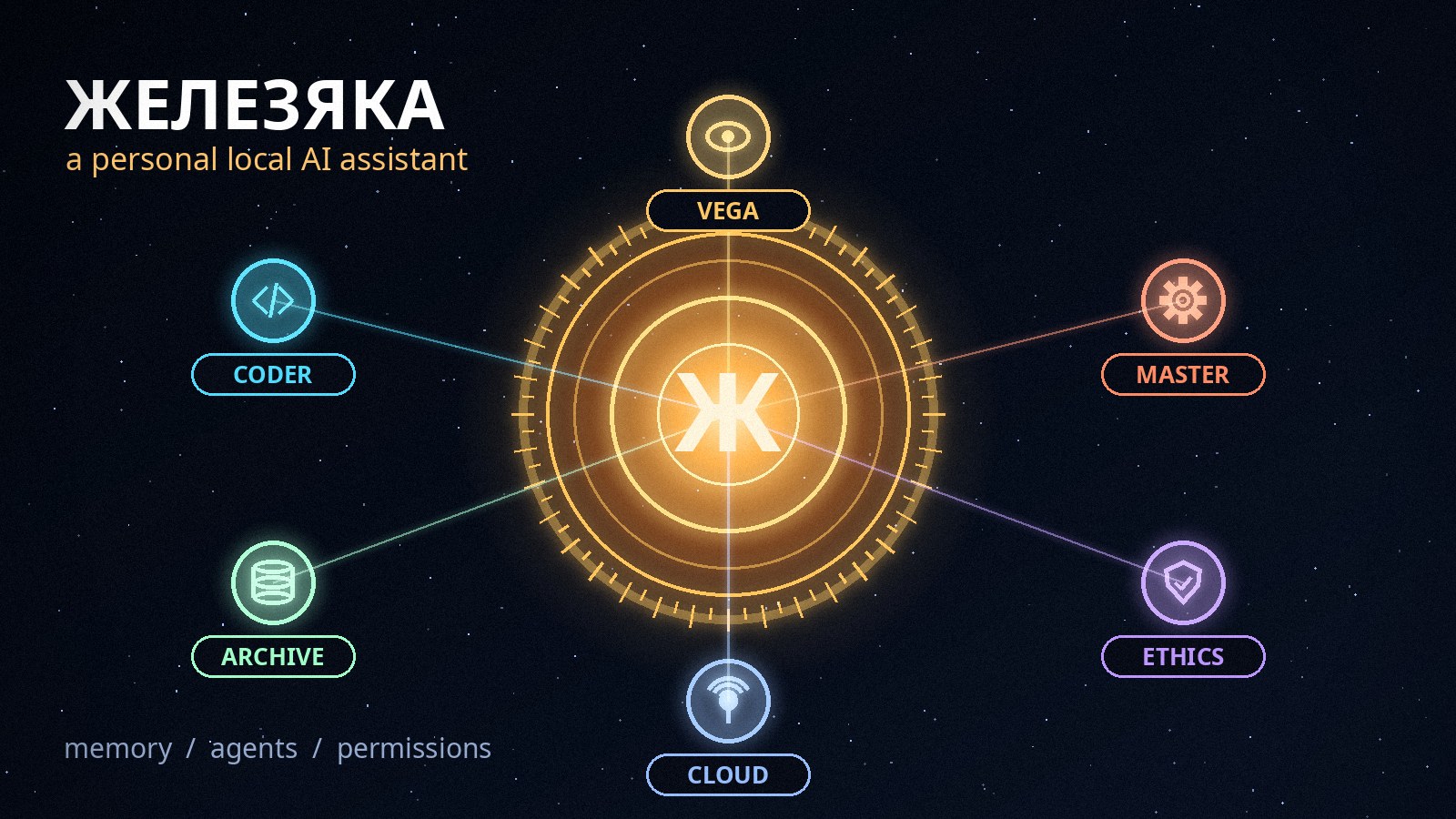
An orchestrator hands work to specialized parts: Coder, Archive, Vega for analysis and research, Master for the system and tools, Ethics and security, and Cloud for tasks where external models are allowed. A model router chooses between local and external models by task difficulty, internet access, privacy settings and the resources of the computer.
Gvozd, the permission layer
The security layer, called Gvozd (the Nail), decides which tools are available and which actions need confirmation, and keeps a log of what was done and why. The assistant may read a file in an allowed folder, but deleting data or sending a message follows the rules the user set.
Where the project stands
An early version, Zhelezyaka Core v0.3.0, had local chat through Ollama, session history, intent routing and structured memory, and live tests showed problems with tool choice and memory use. Autonomy, a reliable permission system, integrations and specialized agents are the target architecture, not finished features. More on the project page.