Neuron

  1. Home
  2. Neuron

Neuron: Offline Cognitive AI

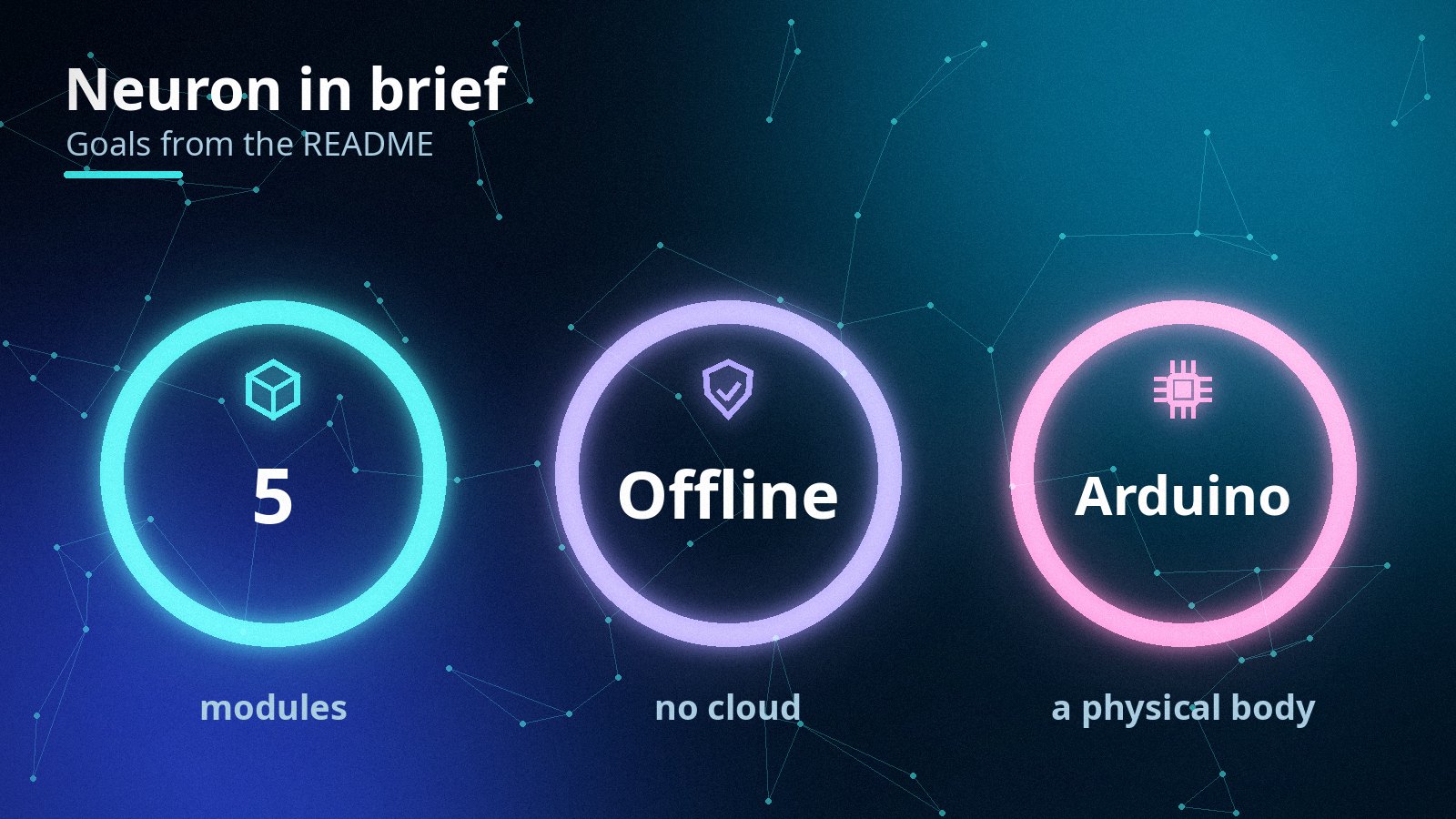
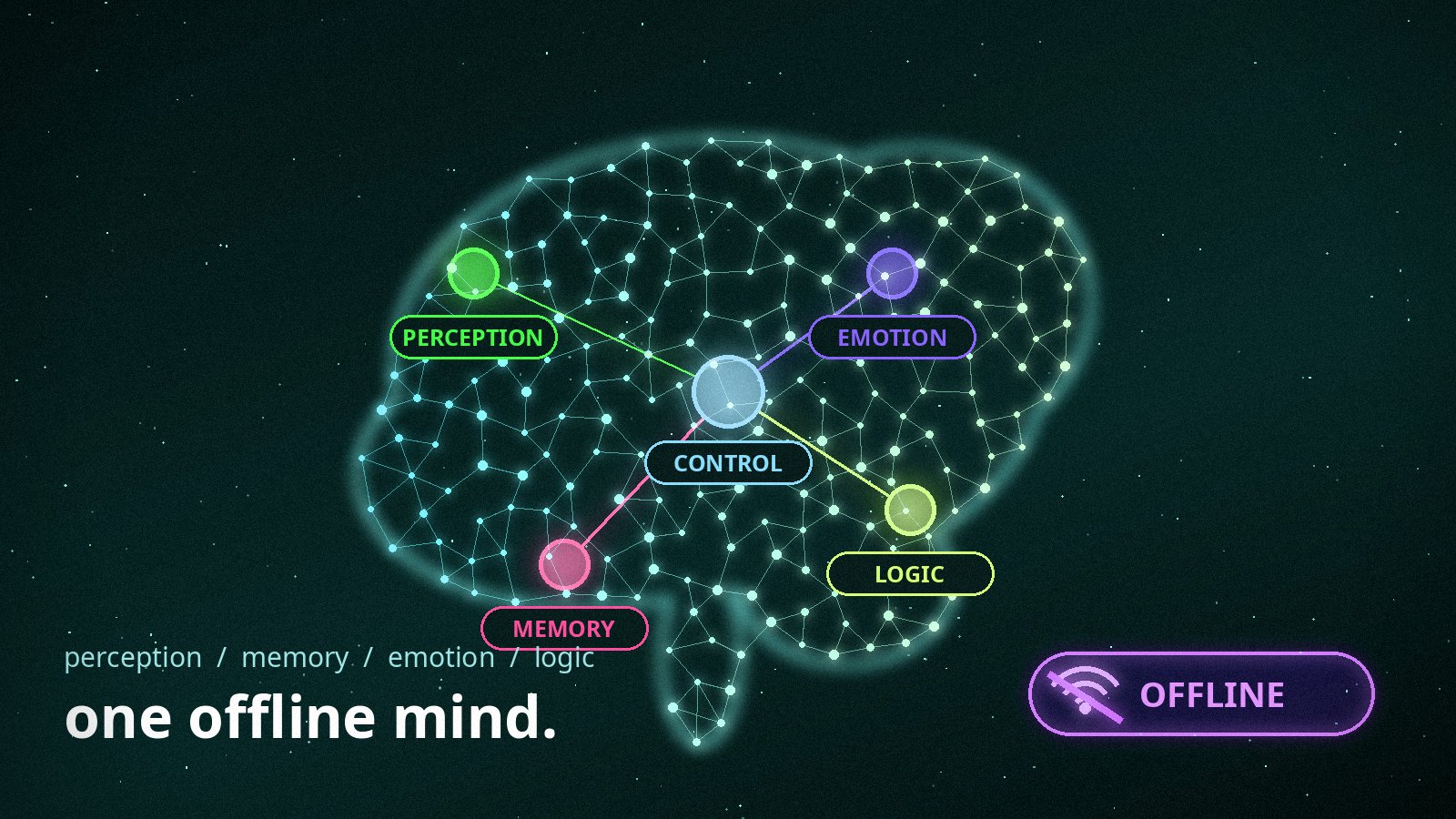
Neuron is an architecture for an artificial intelligence that runs fully offline. It combines perception, memory, emotion, logic and control in separate modules: it perceives the surrounding world through a camera and a microphone, remembers past requests, reacts with a personality and takes decisions.

The project grew out of work on face and voice recognition and out of the research interest in offline AI architecture with memory and adaptive behaviour. A physical body controlled through Arduino is one of its goals.

  • Category :Cognitive AI Architecture
  • Stack :Python (PyTorch, FastAPI declared)
  • Modules :Perception, memory, emotion, logic, central control
  • Language model :Tokenizer, embeddings, transformer blocks, next-word output
  • Physical control :Arduino body
  • Mode :Offline
  • Status :Architecture stage
  • Source :GitHub repository

Core Features

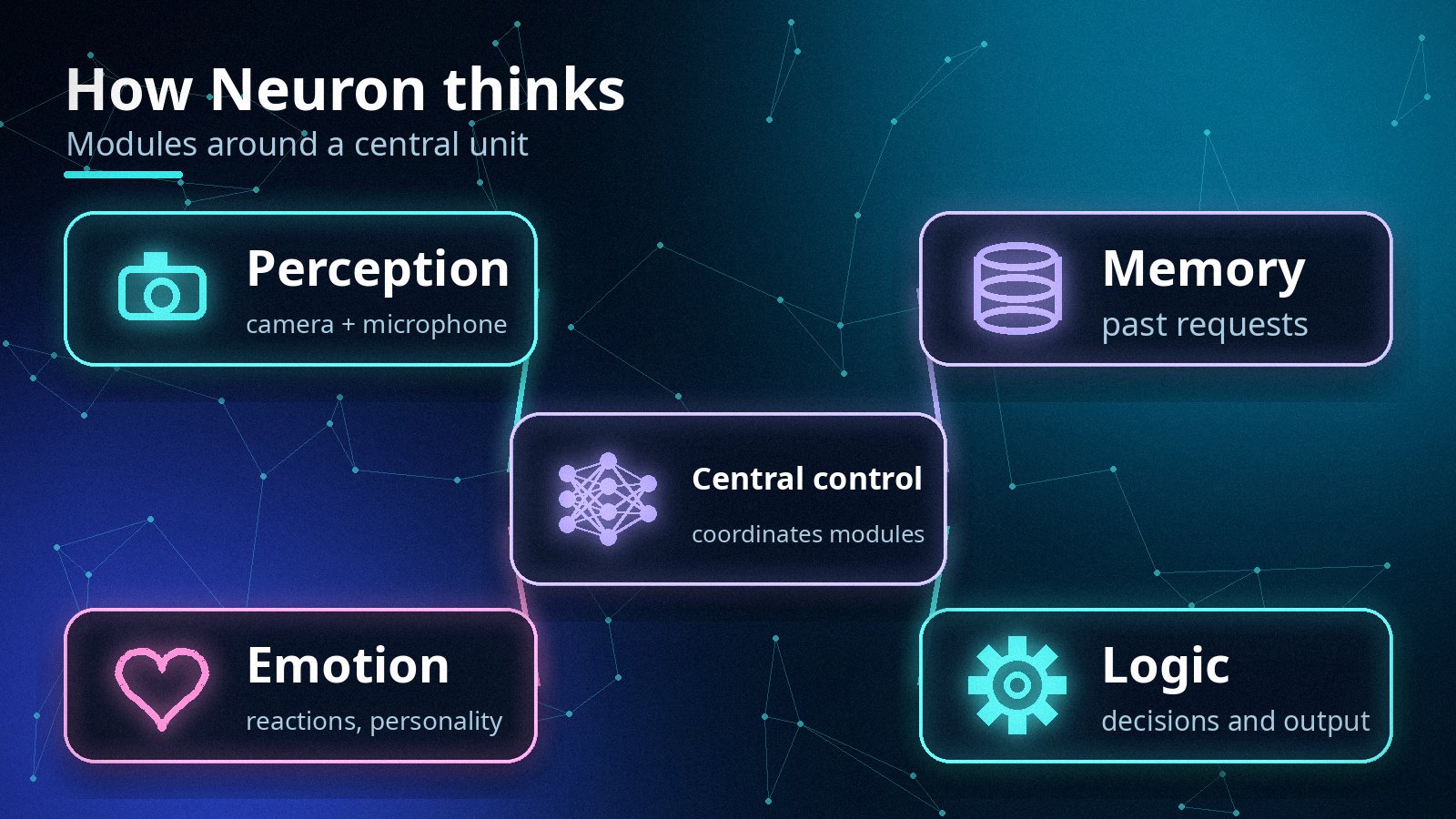
The point of the architecture is separation of responsibility: each ability lives in its own module and talks to the others through a central control unit.

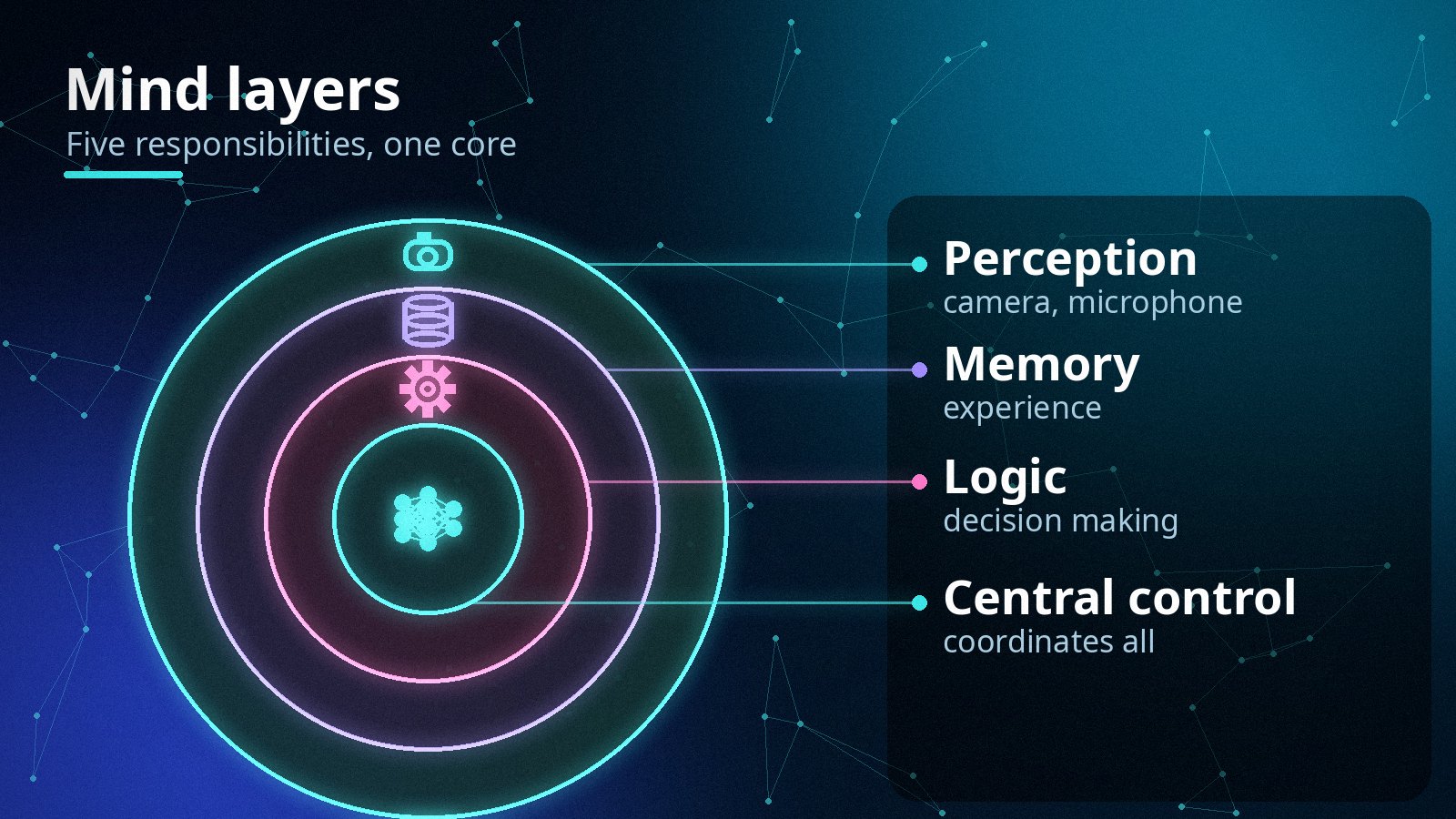
  • Perception module for camera and microphone input.
  • Memory module that stores past requests and experience.
  • Emotion module that generates reactions and personality.
  • Logic module for decision making.
  • Central control module that coordinates all subsystems.
  • Offline operation without a cloud dependency.

“Modular architecture, offline operation, memory and a body: the goals are listed before the code.”

Design Note - Architecture First

Architecture

The diagram shows how the modules interact: perception feeds memory and emotion, while the central control unit coordinates logic and decision modules and produces the output. The text path uses a standard language-model chain: tokenizer, embedding layer, many transformer blocks, then a linear layer with softmax for the next word. The project is at the architecture stage: the structure is defined and implementation is in progress.

Interaction Flow

  • Perception captures the camera and microphone input.
  • Memory stores and recalls relevant past requests.
  • The emotion module shapes the reaction.
  • The central control unit coordinates all modules.
  • The logic module takes the decision.
  • The output is spoken or sent to the Arduino-controlled body.

What It Shows

  • Systems thinking: separate modules and clear interfaces.
  • A research direction: offline AI with memory and adaptive behaviour.
  • Link to face and voice recognition work.
  • Honest status: architecture defined, implementation continuing.

Related Projects

Autonomous Drone Swarm “Like Bees”

Autonomous Drone Swarm “Like Bees”

Arduino / Swarm Intelligence / Vector
LELP: Lunar Electromagnetic Logistics Platform

LELP: Lunar Electromagnetic Logistics Platform

Aerospace Concept / Systems Engineering
Automatic Mafia

Automatic Mafia

Python / PySide6 / Face Recognition

Project Summary

Send a direct message about this project and it will be delivered to my email.